Utah gets hail. Not the baseball-sized monsters that hit Texas and Colorado, but enough — and often enough — that hail damage on a Utah roof is one of the leading causes of roof replacement along the Wasatch Front. The Salt Lake Valley, Utah Valley, and areas from Lehi through Eagle Mountain and Saratoga Springs see damaging hail roughly every two to three years, sometimes more.
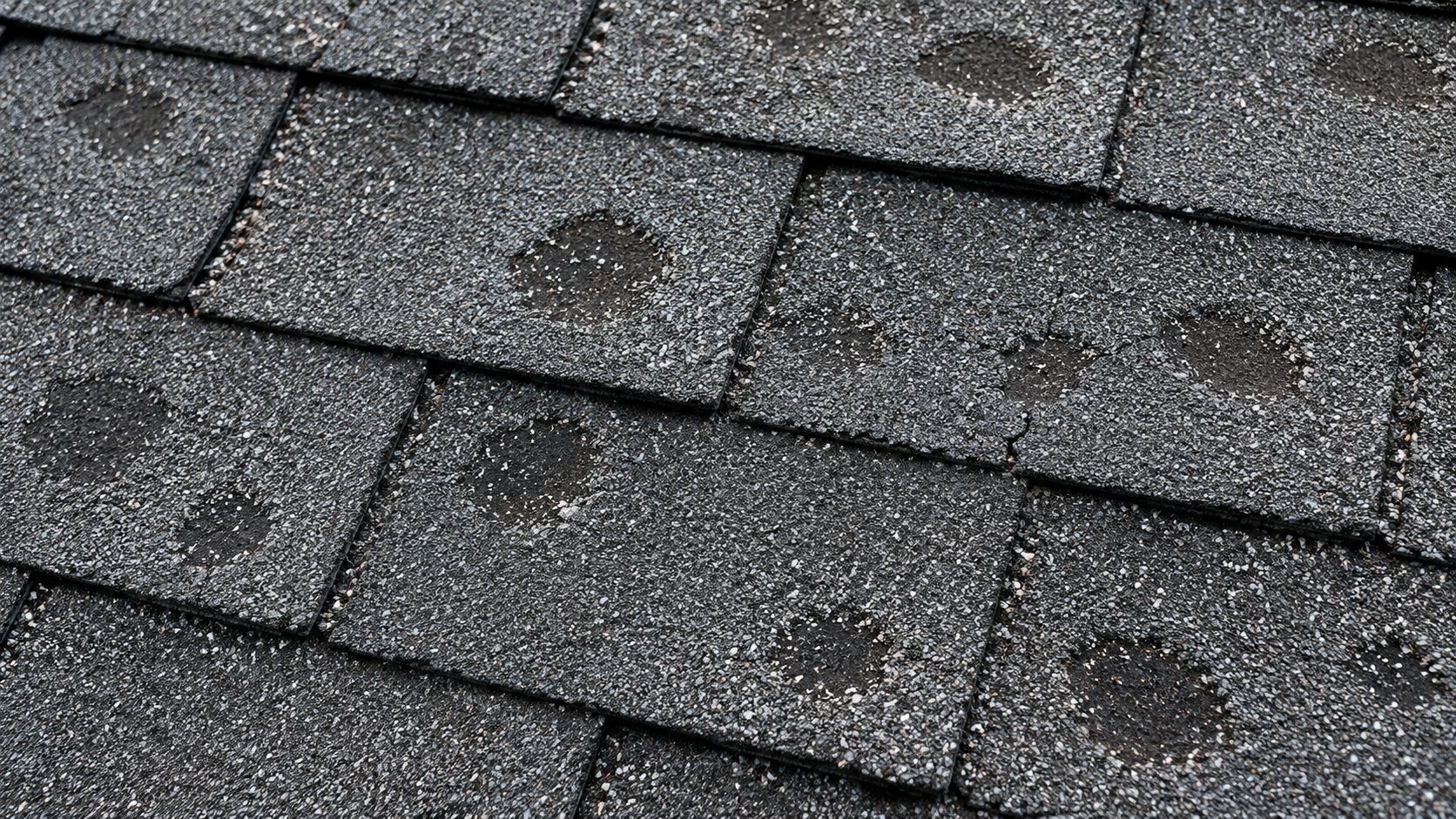
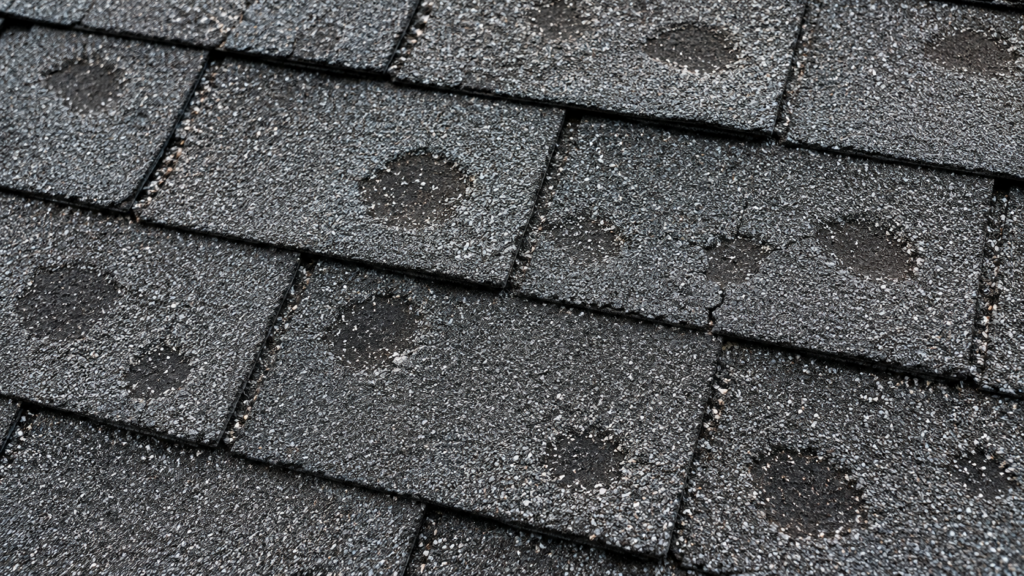
The problem is that hail damage on a Utah roof often doesn’t look like much from the ground. Homeowners see a few dented gutters, shrug, and assume the roof is fine. Meanwhile, the damage is there — small dark bruises on shingles that will fail in the next few years, cracked tile, and displaced granules that shorten the roof’s life by a decade.
After 25-plus years of assessing hail damage on Utah roofs, here’s how to actually spot it, when to worry, how to handle the insurance side, and how to avoid the storm chasers who show up after every event.
What Hail Damage on a Utah Roof Looks Like By Material Type
Different roofing materials show hail damage on a Utah roof differently, which is part of why homeowners miss it.
On Asphalt Shingles
Hail damage shows up as:
- Bruises — small dark spots where the granule surface has been knocked off and the underlying asphalt is exposed
- Cracks in the shingle mat, sometimes visible only under close inspection
- Granule loss in localized patterns — heavy loss around specific spots on the roof
- Fractures at shingle edges or corners
The tricky part: many hail bruises on shingles don’t leak immediately. They fail over the next 2 to 5 years as the exposed asphalt degrades under UV. By the time the leak appears, the storm is long forgotten and insurance won’t cover it.
On Tile Roofs
Hail damage shows up as:
- Cracks in the tile itself (sometimes hairline, sometimes obvious)
- Chipped edges or corners
- Broken tiles in areas with concentrated impact
- Shattered tiles in severe hail events
Concrete tile is more resistant than clay tile, but both can crack under significant hail. Cracked tiles don’t necessarily leak immediately, but they no longer protect the underlayment beneath, which then degrades from UV exposure.
On Metal Roofs
Hail damage shows up as:
- Dents in the panels — usually cosmetic but sometimes structural on softer metal profiles
- Compromised paint or coating where impact chipped the finish
- Damage to seams or fasteners
- Displaced snow guards or accessories
Standing seam and heavy-gauge metal is highly hail-resistant. Softer profiles (like some corrugated or R-panel products) can show significant denting.
On Flat Roofs
Hail damage on flat commercial or residential roofs shows as:
- Punctures in the membrane (TPO, EPDM, PVC)
- Damage to coatings on foam or built-up roofs
- Broken or displaced ballast on ballasted systems
The Ground-Level Post-Hail Inspection for Your Utah Roof
After any significant hail event (marble-size or larger), do this walk-around within 48 to 72 hours to check for hail damage on your Utah roof while it’s fresh and documentable:
Around the perimeter:
- Dents in gutters and downspouts (both easy indicators of hail impact)
- Damaged window screens or torn insect screens
- Dented HVAC condenser fins (bent aluminum fins on the outdoor AC unit)
- Dented mailboxes, painted metal patio furniture, garage doors
- Chipped paint on wood trim, siding, or fences
- Damaged skylight covers or plastic vent pipe boots
In the yard:
- Broken plant leaves in specific patterns
- Shredded landscaping
- Debris from your roof — shingle pieces, granules from downspouts, tile fragments
On the roof (from ground with binoculars if possible):
- Visible dark spots on shingle areas
- Missing tiles or visible cracks
- Bent flashing around chimneys and roof-wall intersections
- Damaged vent boots and pipe jacks (rubber boots crack easily under hail)
- Skylight damage — cracked plastic domes are common
Photograph everything. Date-stamped photos are essential for any hail damage Utah roof insurance claim. Take wide shots and close-ups. Photograph collateral damage (dented gutters, etc.) as well as any visible roof damage.
Why You Should Not Climb Up to Inspect Hail Damage on Your Utah Roof
We say this in every post about roof damage, but especially with hail damage on a Utah roof:
Do not climb onto a hail-damaged roof yourself. Even if it looks fine to walk on:
- Hail-damaged surfaces can be slippery
- You may cause additional damage that voids insurance coverage
- Fall injuries and deaths from residential roof access happen every year in Utah
- Proper hail assessment requires trained eyes — inspectors look for specific patterns and use techniques (like chalk marking bruises) that require training
Get a professional inspection instead. Reputable roofers do them for free after storm events.
Insurance Claims for Hail Damage Utah Roof Situations: The Right Order of Operations
Utah homeowners insurance almost always covers sudden hail damage. But the process matters, and how you handle a hail damage Utah roof claim in the first 48 hours can determine whether you get full coverage or leave money on the table. Do it in this order:
Step 1: Document. Photos and video from the ground, plus any visible interior damage.
Step 2: Get a professional roof inspection FIRST — before calling your insurance company. This is important. A reputable local roofer will tell you honestly:
- Whether you have real damage
- Whether it justifies a claim
- What the scope of work would likely be
If you don’t have real damage, you’ve avoided filing a claim that could affect your rates or coverage. If you do have hail damage Utah roof issues to report, you have documentation to support the claim.
Step 3: File the claim. Call your insurance company with specific information: “We had a hail storm on [date]. I had a professional roof inspection that identified [specific damage]. I’d like to file a claim.”
Step 4: Have your roofer present when the insurance adjuster inspects. This is where a lot of homeowners get shortchanged. Adjusters sometimes miss damage, undervalue scope, or fail to account for related items (gutters, flashing, ventilation). Having your roofer walk the roof with the adjuster and document findings together dramatically improves settlement fairness.
Step 5: Review the scope and payment in writing before work begins. Insurance typically pays in two parts — an initial payment based on actual cash value (depreciated), and a second payment (recoverable depreciation) after work is completed. Understand what you’re being paid and what you’re expected to pay out-of-pocket.
Step 6: Choose your roofer, not the one your insurance suggests. You are legally free to hire the roofer of your choice in Utah. Preferred lists can be fine, but you’re not obligated to use them.
How to Spot a Storm Chaser Selling Fake Hail Damage Utah Roof Repairs
Within days of any significant Utah hail event, out-of-state trucks show up in affected neighborhoods. Crews go door-to-door offering “free inspections” and promising to “handle the insurance.” Some are legitimate. Many are not.
Red flags:
- Uninvited door-to-door solicitation immediately after a storm
- Out-of-state license plates and business addresses
- High-pressure tactics — “sign today,” “the price goes up tomorrow”
- Offers to “waive” or “absorb” your insurance deductible — this is insurance fraud in Utah and you can be liable
- Requesting full payment or large deposits upfront
- No local Utah address, phone, or license visible on their truck or business card
- Cannot show current Utah DOPL license and liability/workers’ comp insurance
- “Free roof inspection” pitch followed immediately by claims of major damage
- Wanting to inspect only the roof, not talk with you about your home overall
Why they’re a problem:
- Many do subpar work and leave the state before warranty issues surface
- They frequently exaggerate or fabricate damage to justify insurance claims
- Some don’t finish the work after collecting insurance payment
- They can put your policy status at risk if fraudulent claims are attached to your address
What to do instead:
- Contact local roofers you can verify (Utah address, DOPL-licensed, verifiable references, established for years, not months)
- Get multiple estimates from local companies
- Verify DOPL license at the Utah Division of Occupational and Professional Licensing
- Ask for local references — jobs completed in your area within the past year
- Check the physical business address — is it a real Utah office, or a UPS store?
Frequently Asked Questions
What size hail causes hail damage on a Utah roof?
Damage typically starts around 1 inch diameter (quarter-size) on asphalt shingles. Larger hail causes progressively worse damage. Older or lower-quality shingles can show damage from smaller hail. Wind direction and impact angle matter too — a marginal storm can cause significant damage on one side of a roof.
How long do I have to file a hail damage claim in Utah?
Most Utah insurance policies require claims within one year of the damage event, though some allow up to two years. Sooner is always better — fresh damage is easier to prove, and interior damage (from leaks that develop later) is easier to trace to the original event.
Will filing a hail damage claim raise my Utah insurance rates?
A single weather-related claim usually has minimal or no impact on Utah homeowners rates because it’s not considered your fault. Multiple claims in a short window can affect rates or coverage. This is why pre-claim inspection matters — you want to file only when you actually have coverable damage.
Can I claim hail damage on my Utah roof from a storm months later?
Yes, if you can document that the damage happened during a specific weather event. Insurance companies have records of storm dates and severity. Filing sooner is better, but late claims for real storm damage are often approved, especially when documented by a reputable roofer.
What if my insurance denies my hail damage Utah roof claim?
You have the right to request a second inspection with a different adjuster, or to hire an independent appraiser. Many claim denials get reversed on second review, especially when you have strong documentation from a qualified roofer. In some cases, filing a formal complaint with the Utah Insurance Department (insurance.utah.gov) triggers a re-review.
Does insurance cover cosmetic hail damage on a Utah roof?
This depends on your policy. Some Utah policies exclude “cosmetic damage” that doesn’t affect roof function. Read your specific policy or ask your agent. Cosmetic damage exclusions are increasingly common on metal roofs and older shingle roofs.
Should I get multiple estimates after hail damage on my Utah roof?
For any significant repair or replacement, yes. Get at least three estimates from established local roofers. Compare them on scope of work, materials, warranties, and price. If one is dramatically cheaper or more expensive than the others, ask why.
Get an Honest Assessment of Hail Damage on Your Utah Roof
If you’ve had hail hit your area recently and you’re not sure whether your roof took damage, get a professional inspection before assuming everything’s fine. Damage that goes undocumented becomes damage you pay for out-of-pocket later.
We do free hail damage inspections across Utah, and we’ll give you an honest assessment — including telling you if the damage isn’t worth filing a claim over. We’re locally established, DOPL-licensed, insured, and here year-round. If you’d rather work with a Utah company that will still be around next winter and the winter after, let’s talk.
Call our Utah team at (801) 828-0259 or request a free estimate online.
Written by Matt Baker, founder of Baker Roofing. Matt has been installing and repairing roofs across Arizona and Utah for over 25 years.
