If you’ve started getting roofing quotes in Utah, you’ve probably noticed they vary a lot — sometimes the spread between three estimates on the same house is $8,000 or more. Some of that’s legitimate (different materials, different scope, different warranty). Some of it is a sign that one or more of those quotes shouldn’t be trusted.
After 25-plus years of putting roofs on homes from Salt Lake City to Provo to Eagle Mountain, here’s what we tell our customers when they ask the cost question. Real 2026 ranges, what’s actually driving the bill up or down, and what to watch out for in any estimate you get.
The Quick Answer
For a typical single-family home along the Wasatch Front (around 2,000 square feet of living space, with roughly 22 to 28 “squares” of roofing surface), here’s what to expect in 2026:
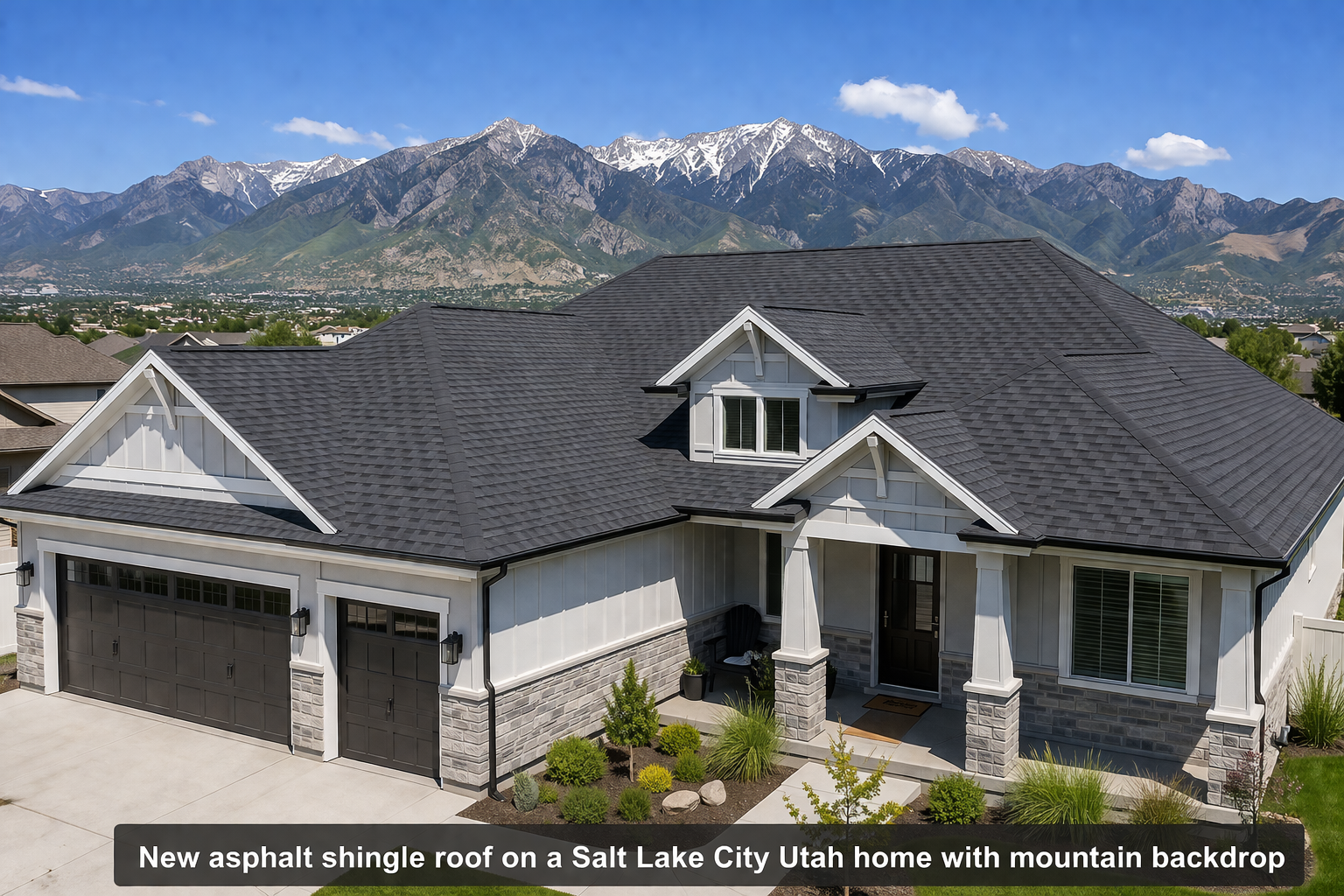
- Asphalt shingle roof (architectural grade): $10,000 to $18,000
- Synthetic shingle (composite): $18,000 to $32,000
- Standing seam metal roof: $24,000 to $42,000
- Stone-coated steel: $20,000 to $35,000
- Tile roof (less common in Utah): $25,000 to $40,000
These are full-replacement numbers. Tear off the old roof, install new underlayment with ice and water shield at the eaves, install the new roofing material, haul away the debris. Repairs are obviously much cheaper.
If your house is bigger, more complex, or has steeper pitches, expect the higher end. Simpler homes in straightforward neighborhoods land closer to the low end.
Why Utah Roofs Cost What They Cost
Roofing is local. The materials, code requirements, and labor on a Utah roof reflect what the climate actually does to roofs here.
Heavy snow load. The Wasatch Front gets dumped on. Roofing systems and their fasteners need to handle hundreds of pounds of snow load, sometimes for weeks at a time. That requires better fasteners, properly sized rafters, and sometimes ventilation upgrades.
Freeze-thaw cycles. Utah’s daily temperature swings in winter (sunny 40s in the afternoon, teens at night) put roofing materials through hundreds of expansion-contraction cycles every winter. Cheap materials don’t last.
Ice damming. This is a Utah-specific concern that drives certain code requirements (like ice and water shield extending well past the exterior wall line) and ventilation upgrades. We covered this in our ice dam article — if your reroof doesn’t address ice damming risk, you’re going to be dealing with leaks every winter.
Hail and wind exposure. The Wasatch Front sees damaging hail roughly every couple of years and high-wind events more often than that. Impact-rated shingles and quality flashing matter here.
Steep pitches. A lot of Utah houses have steep roofs (8/12 or 10/12 pitch is common). Steep roofs cost more to install — labor is slower, fall protection is more involved, and material handling is harder.
Permits and HOA review. Most Utah cities require permits ($150 to $500 typically). Some neighborhoods have HOA architectural review processes that affect timing, color choices, and material options.
Cost By Roofing Material
Asphalt Shingles
- Cost installed: $4.50 to $8 per square foot
- Lifespan in Utah: 20 to 30 years for architectural grade
- Best for: Most Utah homes, budget-conscious homeowners, neighborhoods that allow shingle (which is most of them)
Architectural asphalt shingle is the workhorse of Utah roofing. It handles snow load and freeze-thaw cycles well, comes in lots of colors, and is widely available. The major brands — GAF, Owens Corning, CertainTeed, Malarkey — all make impact-rated lines (Class 4) that can earn you a discount on hail-prone homeowners insurance.
If you’re going asphalt, do not buy the cheapest 3-tab shingle available. The price difference between 3-tab and architectural is small. The lifespan and storm resistance difference is significant. And consider Class 4 impact-rated if you’re in a hail-prone area like parts of Lehi, Saratoga Springs, or Eagle Mountain.
Synthetic / Composite Shingles
- Cost installed: $9 to $14 per square foot
- Lifespan: 40 to 50 years
- Best for: Homes wanting a slate or shake look without the weight and cost, hail-prone areas
Synthetic shingles (brands like DaVinci or Brava) replicate the look of slate or wood shake using engineered polymers. They’re lighter than slate, much more impact-resistant than wood shake, and last decades. They cost roughly twice as much as architectural asphalt but a fraction of real slate. Increasingly popular in higher-end Utah neighborhoods.
Metal Roofing
- Cost installed: $11 to $19 per square foot
- Lifespan: 40 to 70 years
- Best for: Long-term homeowners, snow shed performance, mountain areas, homes with strong architectural styling
Metal is the most expensive option up front but the longest-lasting. Standing seam in particular handles Utah snow well — snow slides off rather than sitting and creating ice dam risk. (Note: snow guards are often installed to control where the snow sheds, especially over walkways and entries.) Some homeowners report meaningful winter heating savings from metal roofs, though the bigger benefit is durability and long-term cost.
The catch: metal is more sensitive to installation quality than other materials. A poorly installed metal roof leaks. Make sure your installer has serious metal-specific experience.
Stone-Coated Steel
- Cost installed: $9 to $15 per square foot
- Lifespan: 40 to 50 years
- Best for: Homeowners who want metal durability with shingle or tile aesthetics
Stone-coated steel (brands like DECRA) gives you the longevity of metal with the look of asphalt shingle, wood shake, or tile. Excellent hail and wind resistance. Common in Utah on homes where the architectural style doesn’t suit standing seam.
Tile
- Cost installed: $11 to $17 per square foot
- Lifespan: 40 to 50 years for the tile (underlayment needs replacement every 20 to 25 years)
- Best for: Mediterranean and Spanish-style homes (uncommon in Utah but they exist)
Tile is much less common in Utah than in Arizona because of snow load concerns and aesthetic fit. When it’s used, it’s usually on Mediterranean-style homes or specific HOA developments that require it.
What Else Drives the Cost
Material is a big chunk of the bill, but plenty of other line items matter:
Square footage of roof, not house. Roofing is priced per “square” (100 square feet of roof surface). Your roof is bigger than your living space because of overhangs, slope, and any flat sections.
Pitch and complexity. Utah’s many-gabled cottage and mountain-style homes are more expensive to roof than simple two-plane gables. Steeper pitches require fall protection and slow the work down. Multiple valleys, dormers, and complex intersections add labor.
Tear-off vs. overlay. Most Utah reroofs require full tear-off down to the deck. Code and warranty requirements typically mandate it. Overlay (going over an existing layer) is occasionally allowed but rarely a good idea — it hides decking issues and shortens the life of the new roof.
Decking repair. Once we tear off, sometimes we find rotted plywood, water damage, or other issues. Replacing decking adds $2.50 to $4.50 per square foot of damaged area. A reputable roofer should give you an estimate that includes a decking allowance with clear pricing if more is needed.
Ice and water shield. Required by Utah code at eaves, valleys, and around penetrations. The amount installed varies — better roofers install more, going up the roof past the exterior wall line by 24 inches or more. This protects against ice dams. It costs more up front and saves you from leaks for decades.
Underlayment quality. Synthetic vs. felt, single vs. double layer — these line items can be a $1,000 to $2,000 difference on the same job and affect how long your roof actually lasts.
Ventilation upgrades. Many Utah homes (especially anything built before 2000) have inadequate attic ventilation. A good roofer addresses this during the reroof — adding ridge vent, soffit vents, or both. It directly reduces ice damming and extends the new roof’s life.
Flashing. New roof, old flashing is a recipe for leaks. Make sure new flashing around chimneys, vents, skylights, and walls is included.
Permits and disposal. Permit costs vary by city — Salt Lake City, West Jordan, Lehi, Provo all have different fees. Dump fees can add $300 to $700 depending on tonnage.
Hidden Costs to Watch For
Common surprises in Utah roof estimates:
- Ice and water shield extent. Cheap estimates skimp on how far up the roof it goes. This matters enormously for ice dam protection. Ask specifically.
- Ventilation work. Often listed as “as needed” without specifics. Get specifics.
- Decking allowance vs. actual. A low estimate that says “decking repair as needed at $X per sheet” sounds fine until you’re replacing 25 sheets. Ask what the average is.
- Flashing replacement. Should be included, not surprise add-ons.
- Manufacturer warranty registration. Some companies skip this step, which voids your material warranty. Make sure your roofer registers it.
- Fascia and soffit repair. Common discovery during tear-off. Some roofers handle it; others sub it out at higher cost or refuse the work entirely.
Insurance and Storm Damage in Utah
Utah sees enough hail and wind damage that a good portion of roof replacements are partly or fully covered by insurance. If you’ve had a hail event or major windstorm in the last year and your roof is showing damage, it’s worth having a reputable roofer inspect before you call your insurance company.
Be cautious of door-knocking storm chasers after major weather events. Many are out-of-state operations that pressure homeowners into contracts and then disappear before warranty issues surface. Stick with established local roofers who’ll be here next year and the year after.
In Utah, roofing contractors are licensed through DOPL (Division of Occupational and Professional Licensing). You can verify a license at dopl.utah.gov. Insurance should include both general liability and worker’s comp.
How to Get an Honest Estimate
Here’s how we recommend Utah homeowners approach the bidding process:
- Get three estimates. Not five. Three.
- Make sure they’re comparable. All three should be quoting the same material grade, tear-off scope, ice and water shield extent, decking allowance, and warranty. Apples to apples.
- Verify license and insurance. DOPL license for the contractor, current general liability and worker’s comp insurance.
- Ask about the crew. Employees or subcontracted day labor? It affects quality and accountability.
- Ask about both warranties. Material warranty (manufacturer) and workmanship warranty (roofer). Both matter.
- Don’t pay 100% up front. A reasonable deposit is 10 to 30%. Full payment before work starts is a major red flag.
- Get the scope in writing. Vague estimates lead to disputed change orders.
Frequently Asked Questions
How long does a new roof installation take in Utah?
A standard shingle replacement on a 2,000-square-foot home takes 1 to 3 days. Metal can take 4 to 7 days depending on complexity. Weather (snow, rain, extreme cold) can extend timelines.
Can I get my roof replaced in winter in Utah?
Yes, with caveats. Asphalt shingles need temperatures above about 40°F for the self-sealing strips to bond properly, so winter installs can work but the seal completes in spring. Metal and synthetic shingles have less temperature sensitivity. Most reputable Utah roofers do install in winter, just on weather-permitting schedules.
Is it cheaper to roof in fall or summer?
Spring and summer are peak demand. Fall and winter are typically less booked, and you may find better availability and slightly better pricing from October through February. The trade-off is weather risk on installation timing.
Can I just repair my roof instead of replacing it?
Often, yes. A reputable roofer will tell you when repair is the right call. Replacement makes sense when the underlayment is at end of life, you have widespread damage, or you’ve already done multiple repairs. Rule of thumb: if repairs would cost more than 30% of replacement, it’s usually time to replace.
Does a new roof increase home value in Utah?
Yes, but not dollar-for-dollar. A new roof typically returns 60 to 70% of its cost in resale value. More importantly, it’s one of the top deal-killers in Utah real estate transactions when it’s failing. Replacing it before listing usually pays off in a faster sale and stronger offers.
What’s the best roofing material for Utah?
There’s no single best answer. Architectural asphalt shingle is the value choice and works well for most homes. Metal is the longest-lasting and best for heavy snow areas. Synthetic shingles fit higher-end homes and hail-prone areas. The right answer depends on your home, neighborhood, budget, and how long you’re staying.
Get a Real Estimate
Online price ranges only go so far — every home is different. If you’d like a free, no-pressure inspection and a written estimate, we’d be glad to take a look. We’ve been roofing across Utah and Arizona for 25-plus years, and we’ll tell you straight whether you need a repair, partial work, or a full new roof.
Call our Utah team at (801) 828-0259 or request a free estimate online.
